"Bob Dylan going electric" at the 1965 Newport Folk Festival is one of those epochal moments in rock history that seemingly everyone has heard about, but what few people seem to know is that it wasn't some ephemeral event that we only know from word of mouth -- filmmaker Murray Lerner documented the performances at the Newport Festival for several years running, and The Other Side of the Mirror collects footage from the three years Dylan appeared at the celebrated folk gathering, allowing us to see Dylan's rise through the folk scene for ourselves. Watching Lerner's documentary, what's most remarkable is how much Dylan changed over the course of 36 months; the young folkie performing at the afternoon "workshop" at the side of Joan Baez in 1963 is at once nervy and hesitant, singing his wordy tunes while chopping away at his acoustic guitar and energizing the crowd without seeming to know just what he's doing. In 1964, Dylan all but owns Newport, and he clearly knows it; he's the talk of the Festival, with Baez and Johnny Cash singing his praises (and his songs), and his command of the stage is visibly stronger and more confident while his new material (including "Mr. Tambourine Man" and "It Ain't Me, Babe") sees him moving away from the "protest songs" that first made his name. When the audience demands an encore after Dylan's evening set (Odetta and Dave Van Ronk were scheduled to follow him), Peter Yarrow tries to keep the show moving along while Dylan beams at the crowd's adulation, like the rock star he was quickly becoming. By the time the 1965 Newport Festival rolled around, Dylan's epochal "Like a Rolling Stone" was starting to scale the singles charts, and the hardcore folk audience was clearly of two minds about his popular (and populist) success. When Dylan, Fender Stratocaster in hand, performs "Maggie's Farm" backed by Al Kooper, Mike Bloomfield and the rhythm section from the Paul Butterfield Blues Band, the raucous but hard-driving number inspires a curious mixture of enthusiastic cheering and equally emphatic booing, and while legend has it that the version of "Like a Rolling Stone" that followed was a shambles, the song cooks despite drummer Sam Lay's difficulty in finding the groove, though if anything the division of the crowd's loyalties is even stronger afterward. After these two numbers, Dylan and his band leave the stage, with Yarrow (once again serving as MC) citing technical problems (if Pete Seeger really pulled the power on Dylan, as legend has it, there's no sign of it here); Dylan returns to the stage with an acoustic six-string to sing "Mr. Tambourine Man" and "It's All Over Now, Baby Blue" before vanishing into the night without comment. While much of the audience at Newport in 1965 wanted the "old" Dylan back, his strong, willful performances even on the acoustic stuff makes it obvious that the scrappy semi-amateur we saw at the beginning of the movie was gone forever, and the ovations suggest more than a few people wanted to see Dylan rock. Lerner's film tells us a certain amount of what we already knows, but it gently debunks a few myths about Dylan during this pivotal moment in his career, and his performances are committed and forceful throughout; no matter how many times you've read about Dylan's Newport shoot-out of 1965, seeing it is a revelatory experience, and Lerner has assembled this archival material with intelligence and taste. This is must-see viewing for anyone interested in Dylan or the folk scene of the '60s.
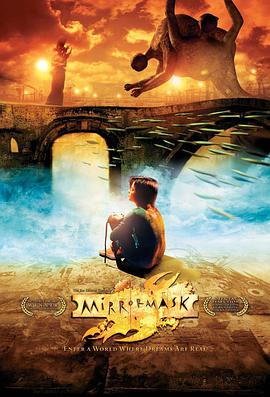
海伦(斯蒂芬妮·莱昂尼达斯 Stephanie Leonidas 饰)从小在马戏团长大,可是身边那些让所有孩子兴奋的事物却只能让她感到厌倦,她想逃离这种不真实的生活,因此和父母发生冲突。不幸接踵而至,先是妈妈(乔安妮·坎贝尔 Joanne Campbell 饰)在表演中倒下,住进医院,接着父亲透露马戏团经营陷入危机。心怀压抑和愧疚的海伦进入一场梦境,那里由光明女皇和黑暗女皇同时统治,但是光明女皇病倒了,世界的平衡被打破,海伦受托去寻找“镜面具”,以拯救这个梦中世界。在小丑瓦伦丁(贾森·巴瑞 Jason Barry 饰)的陪伴下,海伦踏上寻找“镜面具”的路途,似乎只有先拯救梦境,才可以拯救现实……
在一个乡间周末旅行中,劳拉(葆拉·贝尔 Paula Beer 饰)奇迹般地在一场车祸中幸存下来。虽然身体毫发无伤,但她的内心却受到了深深的震撼。她被事故目击者贝蒂收留,后者细心照料着她。渐渐地,贝蒂的丈夫和儿子也开始接受劳拉的存在,家中恢复了一种近乎家庭般的宁静。然而,不久之后,过去的阴影再次降临……